Tuesday, April 12, 2011
Grit makes the Pearl...
Hello. Happy Easter, first of all. I'm enjoying the chance to potter at home, to play a little golf and reflect on the past four months or so since Easter.
Anyway, I thought you might like to know that since Christmas, I've begun to try to learn the guitar. Now, this is a bit of a new thing for me; I've never, ever learned to play any musical instrument. It's kind of odd, especially when you consider that I love music - I've spent thousands of pounds on it since my teenage years.
And, well, let's just say that it's not as easy as it might seem, this guitaring. I've spent hours and hours practicing my chord changing, learning basic pentonic scales and beginning to learn bits and bobs of songs I like. Perhaps most notably - I can now play the beginning to 'The Funeral' slightly slower than Band of Horses can. Heh.
It's been fun, so far, partly helped by the fact I have no expectations (save to be able to play songs/be able to noodle). I don't have any desire to pack it all in and become a musician, but I do find myself getting cross when I can make a chord change quickly enough.
That in itself's been interesting; my guitar teacher's got me using a metronome to get quicker, and that led to an admission from my flatmate (a former teacher of guitar himself) that he'd never used one. No, he'd just used his ear, and never been taught the 'proper' way, and wished he had, as he admitted his tempo wasn't up to snuff, and that would've helped. He, like me, played to amuse himself.
Now, I want to learn the 'proper way', even if I at a later date I short-hand it. I know what my musical desires are (though my teacher tells me that as soon as I play with other musicians, I'll want to kick it up a notch), and am happy enough. I'm sure there'll come a time when I know more to challenge some of the things I've been taught, though.
What interests me about all of this is that I think proper practice does require proper grit; to learn things the 'right' way and ask pertinent questions as you go along. I've always wanted to learn the way it's been done, historically - to challenge what's been accepted as the norm, and find out when it's useful/when it can be disregarded.
Running AdGrads, I have met a lot of graduates. Many incredibly talented, many incredibly conscientious...with the odd one that's so talented that they'll re-write the way the business is thought of.
What I find most interesting (bearing in mind AG's been in existence for about 4 years now) is to track the progress of those who have been successful the first time round versus those who've had to work at it and those who've given up and done something different.
Without question, there are some brilliant, brilliant people in communications. Like my flatmate's guitar playing, they've demonstrated a natural ability. But, occasionally, they get to about two years in, and stall. They've made it. To the average person (and client, in a lot of cases) they know what they're talking about. Yet they're disillusioned; they've put so much into the goal of getting in that there's no real incentive to push on. They're able to play their songs, tap out their beats and, ultimately, be a cog in a business. I think this happens most often to the planners I've seen - there's no real job title change, short of getting in and on.
It's the triers that do best in both businesses; those who can internally motivate themselves, be gritty and ask the right sort of questions. These callous-finger-tipped sorts don't just 'settle' for things. So you can't move from F to C quickly enough? Keep working. Find another way of doing it. Hum along to the song you're trying to master to learn a better way to play it than the oft-wrong tab pages suggest to do so. When it comes to comms, don't just accept that because you're two years in and working in London that planner x's word is law, or that what a client says is the way it always will be.
Get out there, meet different sorts of people, and apply some real life to situations (as Rob's excellent post points out). Don't just listen to Twitter or Campaign Magazine. Those promote a very 'media' way of thinking about the problem at hand.
It's perhaps no wonder that the public no longer thinks that the ads are better than the programmes - so many communications initiatives are created as much to please the 'in' crowd as anything else. I don't give a fuck what famous planner Y thinks of my campaign. If it met/exceeded its objectives (which, in truth, only you and the client will know), then it's worked. It's like this tweet; I have no doubt whatsoever that the people they wanted to talk to weren't 20-30 something comms professionals in London. No doubt at all. So many people judge 'the work' not as punters, and that's a big problem.
I think lazy judgements on the work is another symptom of a lack of grit; a lack of willingness to think about just how real people (remember them?) will behave when work like that is placed in front of them.
To take this back to the guitar again - my guitar teacher, Ryan Carr, is trying to make a go of a career as a full-time guitarist (rather than as a 50/50 teacher/guitar player split). He has a refreshing attitude to the notion of grit. On my second lesson (after buying some more kit - a capo/metronome from a nearby shop), I asked him why most people in Denmark St music shops were such dickheads. Most of them sneered like bastards when I asked some pretty simple questions about just what brand of capo I should buy. He said to me that most of them were washed up, the sort of guys who had/have some natural talent, but were unwilling to ever chance their arm and try for full time careers as musicians. He knows that he's in a risky position, and that he's got some difficult creative decisions to make - to the T-Mobile example earlier, just how populist does he make his music? Regardless of which way he goes, I respect him for giving it a go, and being true to what he actually thinks, and not a sneery musical sycophant.
It's the worrysome nature of creative careers that it's often easier to sit in the sidelines, being in with the in-crowd, going along with the popular consensus because you're too frightened to make something happen or venture how you really feel.
And, frankly, I think that's a bit sad. I think, for the likes of comms folk, that we shouldn't be frightened of arguing fully for the work, about just why it will/won't work, and be less frightened of just blithely nodding along with what famous planner/creative x says. If we don't do that, we run the risk of sitting, working in the ad equivalent of the music shop from High Fidelity, where people wank on for hours about gamification - something, which whilst wonderful as a theory, just might not sell more bars of soap.
I like working with people who have strong beliefs. People who don't work in a culture of fear, who say what they think and argue about the direction of accounts. People who I can raise my voice towards and go to the pub with afterwards. People who have their comms callouses, who love what they do and have tried to get better. Not people who've glided in, grown disillusioned and are too scared/lazy to do something about it. That's where the best work comes from, whether it's a song, an event or an ad.
Anyway. Back to trying to learn the Crane Wife 3.
Sunday, April 10, 2011
Consultancy with Conscience...?

Sunday, November 07, 2010
Johnson, Writing, Briefing and Orwell..

Yes, most are shorthand for a bigger thought, but I don't find them particularly helpful.
Jen, my colleague at work, pointed to a T.S. Elliot essay, 'Tradition and the Individual Talent', which asserts the need of creative work/ideas to have some nod to the tradition in which it is born into, in order to be understood and be accepted.
And, after reading that, I began to think about the odd good idea I have when I write briefs. Without exception, the best thinking happens (or, indeed, the best selling to client) when complicated things can be translated into simple language, which can easily be shown to be spreadable - people read it, and it leads to a debate or a thought from it.
Not something which is self evident (I'm looking at you, Transmedia) and has a word attached to it which confuses the 95% of the world that don't work in comms - and some of those who do. When words like that get accepted, I think they lead to exclusivity, and not great ideas.
Now, I don't mind words which coin something brand new - but they should be able to be understood from the get-go. Otherwise, I don't think Planners are doing their job, which is (partly) to synthesise complex topics, encourage lateral thinking, new, useful ideas and, ultimately, behaviour change.
So, I decided to have another look at my writing Bible, George Orwell's 'Politics and the English Language'. If you haven't read it, stop reading this and take ten minutes to sit down, have a cup of tea and pore over it.
Like Richard, I'm a very big fan of George Orwell, and thought it was worth splicing in some of his thinking with Johnson's lecture, and what we know about Eliot. This next quote is a great introduction to how to write decent briefs (especially propositions, for my money):
"A scrupulous writer, in every sentence that he writes, will ask himself at least four questions, thus: 1. What am I trying to say? 2. What words will express it? 3. What image or idiom will make it clearer? 4. Is this image fresh enough to have an effect? And he will probably ask himself two more: 1. Could I put it more shortly? 2. Have I said anything that is avoidably ugly?"
And, next, Orwell continues to explain (much, much better than I can) about why using lazy, shorthand phrases is wrong:
"When you think of a concrete object, you think wordlessly, and then, if you want to describe the thing you have been visualizing you probably hunt about until you find the exact words that seem to fit it. When you think of something abstract you are more inclined to use words from the start, and unless you make a conscious effort to prevent it, the existing dialect will come rushing in and do the job for you, at the expense of blurring or even changing your meaning. Probably it is better to put off using words as long as possible and get one's meaning as clear as one can through pictures and sensations. Afterward one can choose -- not simply accept -- the phrases that will best cover the meaning, and then switch round and decide what impressions one's words are likely to make on another person. This last effort of the mind cuts out all stale or mixed images, all prefabricated phrases, needless repetitions, and humbug and vagueness generally."
To bring this back to the Steven Johnson lecture, he talked a lot about the 'Architecture of Serendipity', environments that take advantage of the slow burning nature of ideas, that make the connections between people. Comms agencies need to not quash these thoughts, not impose artificial environments (I'm looking at you, lazy briefings and brainstorms) which don't help.
You can see in your mind's eye, can't you? A planner with no time, cobbling together some of the latest shorthand buzzwords, confusing the creative/account team, and pissing in the well of inspiration.
Those three writers are why I have a natural tendancy to dislike whatever the comms word of the month is. I like analogies, because they tend to do the sensation and image part much better than an 'Agile' or a 'Platform', which already lead you to the wrong places.
I'm aware of the need to coin a term, but most, I don't think, are that helpful. The lazy definition of a planner as 'the smart one' encourages this, in truth. Heck, just look at the Big Society - it reads like it was written by a bunch of planners with not enough time.
Sunday, August 01, 2010
The folly of categorisation...
In recent years, I've become a bit of a muso, as the odd post on this blog (and how I spent my student loan) should testify.
And, in no other part of my life do I get as much pleasure as recommending a new band, or an old band that no-one else knows.
There's the old horse chestnut when you have to describe a band to someone else, and compare them to others. I'd argue that there are bands or artists who take such a right turn from their usual sound (though I don't like him, witness Plan B recently, or say Radiohead for Kid A) that they defy categorisation.
This sort of thing is why I worry a bit when people apply arbitrary labels to people to explain their behaviour. An 'early adopter' for one product doesn't necessary apply to the next one they release. I love the iPod, but would I buy a Mac? No, and there are a variety of reasons. I would consider Nike for running shoes, but fashion trainers? Not a chance.
Segmentation is fine when it works for broad behavioural patterns, but the whole Gladwell bell curve attempt by agencies to neatly fit people into an assumptive model, or to assume buying patterns somehow have a rational pattern is bullshit.
Much as I find him to be a grumpy bastard when he writes, this is something I cede to Taleb. People are too chaotic, and life is too random, to assume that the most middle of the road strategies are going to work. Why not do a combination of the safe and highly dangerous when planning or executing campaigns?
Middle of the road means your market share will atrophy. Grouping consumers as early adopters means your values will parallel theirs; witness brands which chase an ideal too strongly; one which has gone out of fashion (say most mobile phone brands and having an eye on the future) - or those which succeed by re-harnessing an ideal which has come back in (say, Old Spice or Hovis).
Daily, people defy audience segmentation. So why do we bother? Increasingly, it looks like something which results in jobs for the boys; a lazy back up plan for weak-willed Marketing directors.
I'd far rather be a brand which did the basics brilliantly and hedged its bets on consumer behaviour, rather than executing a strategy which has been passed around so many people that it now bears no resemblance to what was first presented.
Given these trading conditions, strategies either have to be so, so basic (I'm thinking of a certain jeans brand's recent work) as to seemingly insult the intelligence of its audience and not really say anything, or contain a lot of mixed messages which don't DO anything.
We talk in hushed tones about a 'purpose idea' or a 'brand ideal', but all of this is bullshit if it relies on the sort of Stone Age segmentation which a lot of marketers seem to be so fond of. People just aren't a brand character; they have more interesting little niches or jagged edges - it's those which'll make money going forward, those fascinating gaming inspired Easter Eggs (like Google's Pacman display, or Dole's approach to labelling) which tell you more about the people who are going to be your consumer for the next twenty years, rather than an empty current figure.
In fact, gauging the lifetime value of a consumer is interesting these days. A Facebook 'fan' is obviously not a reliable metric here. As discussed on twitter, there's quite a gap between being a fan and being an advocate, someone who will keep on buying.
A personal example - I love Adidas trainers. I like the style, I admire the Predator connection, and love their golf clobber. Yet, I think their marketing (compared to Nike) is often a bit amateur hour. I wouldn't favourite their stuff on Facebook, but give me some money off some Stan Smiths, and I would buy. Nike, I'd love the thinking behind the work, but would I buy their trainers? Not a chance.
Digital metrics are great. I think it's wonderful to be able to gauge the sentiment behind work, and see how well it's been received online. But would I rely on them to knock out a segmentation, or be able to tell how easily my product would fly off the shelves? Not a chance. Would I use them to figure out how to place my budget, and how much of it is for straight promotional activity and how much of it is for more chaotic activities? Damn right.
Saturday, July 10, 2010
Obliquity: Why You Shouldn't Behave Economically..

Hello there. It's been a little while since I've posted. Sorry about that. Been busy at work, doing a variety of new business bits and bobs, along with trying to hire a Junior Planner for the burgeoning department.
One of the more fun things which has happened has been getting a book budget (a bit sad, but very exciting if, like me, there's a lot you want to read). And, one of the first books on the list was Obliquity by John Kay, which has been oft-trumpeted by the IPA.
Now, if you click on book's link, you'll find it's had a bit of a panning by certain people, who claim the book only contains one idea. Well, they aren't wrong. And, it is short. That said, I wasn't expecting more than an idea in 180 pages.
Anyway, on with the review. Kay merges some of Taleb's Black Swan thinking with Kahnemann et al (which makes sense, as an former think-tank employee and a senior financier) to come up with the central hypothesis about life and problem solving. Essentially, all what he calls 'high level objectives' (life objectives like being successful/happy et al) are best achieved indirectly. Life, for Kay, is too complex to try and map a direct solution onto it.
Most people, in his view, after they have achieved something, back their opinions up with post-rationalisation (sound familiar, planner folk?) as they can't adequately explain all of the factors which governed what they did. He calls this Franklin's Gambit, in homage to Ben Franklin, who wrote about how he made moral decisions:
“Divide half a sheet of paper by a line into two columns; writing over the one Pro, and over the other Con. Then, during three or four days’ consideration, I put down under the different heads short hints of the different motives, that at different times occur to me for or against the measure.
“When I have got them all together in one view, I endeavour to estimate the respective weights… I have found great advantage for this kind of equation, in what may be called moral or prudential algebra.”
This was known as Franklin's Rule, but it is rarely so black and white as that when dealing with major corporations, government or the like - decisions have already been made internally, or a narrow picture has been painted and acted upon, so any work done creating models or the like is simply justifying the decision that's already been made.
Does this sound familar to anyone who works in oooh, Advertising, PR or Management Consultancy? Kay preaches the need to get started, to focus on those small tasks which work towards the larger goal; new problems and thoughts will occur.
I'm somewhat divided by this book; part of me thinks it's terrific, and a very good justification for trying, failing and carrying on, and has useful ammunition to stop clients deciding that the communications solution is black before they've ever contemplated white.
The more cynical side to me agrees with the Amazon critics; for all its worthy case studies and writing, it does essentially play the same note throughout the whole book. Yes, of course people act with a sense of pluralism - no-one (save the brain damaged) can focus wholly on one goal and never be shifted. Real life's not like that; a small child could let you know that it's not fair, never mind a FT columnist/former Director of the Institute of Fiscal Studies.
I would say to you (whoever 'you' are) to have a look at it - particularly if you've not dealt with many big corporations in your time; it's a welcome voice of sanity when it comes to goal setting and focusing attention on getting the small things right as an absolute necessity. It also does a good job of justifying some of the more obscure bits of Planning, in my opinion; i'm not surprised the IPA liked it so much.
Saturday, May 15, 2010
Far too important to leave to chance..
This blog was originally started with selfish reasons (aren't they all, to begin with?) I wanted to get into the ad business, and I wanted to be heard. Happily, it worked.
Now, as time went on, the need to stop people doing what I did (or learning from what went well and why) became more of a primary focus. So much, in fact, that it helped spawn AdGrads, and I'm delighted that it continues to help people into the business.
It helps throw the curtains open and show (I hope), just what goes on the murky communication world, and what agencies are really looking for, even if they don't always say.
However, there's still an itch on my part - there are some massive, massive barriers that the creative industries suffer from, and this is sort of a plea to my readers to help out:
1) Staffed by people "like me"
I am white, middle class and British. I don't have data to hand, but people like me make up the overwhelming majority of the UK advertising industry. I'd like to say this is fine. I really would. But I can't. If you get people who think the same, act the same, go to the same places, live in the same area, you get vanilla work. It's not helped by archaic agencies only allowing those who are vaguely related to people who work there get work experience.
Now, I can't help my background (having spent most of my degree course apologising, it would seem, for being responsible for the world's literary ills, and I don't mean my shoddy undergrad essays), but I recognise that diversity is not just an old, old wooden ship, and will lead to more interesting places to work, and better, more focused work.
2) Economy and Geography
It is BLOODY expensive to move to London, and it is hard to relocate to a big city where you know few people. The web's helped to minimise this, to some degree, but if you're not from the South East, you have a far harder time getting into the industry, especially given pretty piss-poor starting salaries (yes, they get better, but £18k when your flat costs £550 a month before bills means you'd better love free museums in the first year in the business).
This needs to change in some way shape or form - people need to have a way of justifying being paid just a little bit more, and the comms world needs to see beyond the borders of Kent or Surrey when it recruits. A broader recruitment policy, and paying just a few thousand pounds more would help a great deal.
3) Prizing academic qualifications over practical ability
I've met an awful lot of Oxbridge graduates since working in communications. Many are bright, erudite (as you'd expect) and well suited to their jobs. But, on the other end of the scale, i've met those who really, really aren't - there's no hunger, no passion or fire, and no real interest in the career. They signed up because they wanted an academic exercise and aren't sure what to do with themselves. Some should be academics. Some should just do something else.
And, given what I know about how agencies recruit, red brick University status shouldn't be everything. The IPA have done their bit with Diagonal Thinking, but more needs to go on. There needs to be more stories of people starting in the post room and working up. The comms industry needs to get better at marketing itself - there's a curious reluctance to, partly because whenever a camera comes into one, agency people behave like tits, and parts of the job seem faintly unreal to those who spend their days in front of organograms and spreadsheets.
4) Lacking hunger
Through AdGrads, I've met an awful lot of people who want to get into comms. Some are very bright, others who aren't as bright but are damned persistent, and those with the magic combination of both.
Part of it is because the industry doesn't promote itself very well - so those who are genuinely bright aren't as hungry as they perhaps need to be because they don't know the ins and outs of the job. Generally though, whilst it's easy to decry passion as being somehow a misdirected trait, I want to see people who will turn their hand to anything. It's more important than a first in your degree. The future belongs to people who care about what they're going to do - you can always teach people the basics, but you can't teach them how to explore new things. That's born, not made.
What you can do
Now, with all of this said, I had a very interesting meeting last week. It appears there are other people who are committed to coming up with a solution to those four problems, rather than just blogging about it, like yours truly.
I met a man called Marc Lewis, who is Dean of the newly (re)formed School of Communication Arts. Marc was the last scholarship student of the school when it existed in its previous incarnation. A successful career later, and he's now committed to helping break down those barriers by encouraging those who'd have been put off otherwise to apply for his school's accredited qualification. They accept scholarship pupils, and encourage entrepreneurial folk to get involved - watch the video on the site to understand more.
Now, the reason this post is on WAM rather than AdGrads is because it concerns you, dear reader. Their syllabus is written entirely by wiki by people who are currently in the industry. They are not far off from opening for a new term, and need YOU. You can do as much or as little as you'd like, which is always a good thing. I've signed up, and think you should too. Have a look here.
After all - I want to be sure the industry's still in rude health, and finds the best people. Who knows? You may end up employing some of the school's alumni.
Monday, May 03, 2010
Time, Time, Time..
How long is too long? Does it really take weeks and months to write a thoughtful piece of creative work? What would happen if we tightened the screws and made it days and weeks? Why do some people need years to summon up the courage to tell someone they love them?
Flipping it - when does quality begin to suffer with not enough time? Coming up with a decent creative solution shouldn't be like keeping battery hens and expecting a golden egg every time.
I'd think that this would vary depending on who you asked, like the Tom Waits song of the same name. Account handlers would always like more time. They are those who are often placed in battery hen situations, and it's nice when you have a select few who can rise above it and see the blue skies. I think the reverse happens to planners, in truth. We don't often have particularly concrete deadlines for our work (save pitches and big bits of client scheduling).
And, as the Fast Strategy conferences touched upon, there may be some merit in speeding up the whole planning process now and then. You can have too long to think about something. I bring this up because, well, PR planning has a lot less time than Advertising. You get a month to pitch? We get two weeks. When faced with this sort of thing, it's easy to understand why there's a historical divide between the two disciplines.
Personally, i've always been an advocate of it taking as long as it takes. Yes, I know that sounds incredibly woolly, but to assume that you can come up with anything more than a semi-decent strategy in a day is fallacious. I think the bosses i've ever worked for have understood this - you can come up with a piece of thinking on Sunday that's infinitely better than a week's worth of work when you're obviously trying to think about it.
Strategic thinking's not a linear process, and any job which is actively engaged with the creative process should recognise this. It's not a simple matter of hot housing ideas or thinking. It's about doing stuff to take your mind of it, often. Cwoffee is an extension of this, or even something like my banal twitter account. The aim of both is almost to take my mind off the day job, so I can allow my unconscious mind to chug along to a more interesting solution.
It's also why it's so heartening to realise that most marketeers are beginning to reject the notion of a straightforward purchase funnel. Real life isn't like this, so why the hell should a 'buying process' really exist? It's comforting, but it's damned wrong. It's why the idea of lining up or organising your organisation like a client troubles me; we're The Agency. We are the people who should surprise, shock or delight their clients. Not mirror them. If clients can mildly ape what we can with some talented staff writers and Mac-ites, then proper lateral thinking is the best weapon we have. To foster that, we need to not be tied to being a little sub-client doing factory which you find in many of the agency client relationships around the world.
And when this comes to media, as discussed before, it really puts a lot of the big buying shops under the microscope. Why would you bulk buy media packages? Why wouldn't you be more reactive and creative? To buy even a series of TV spots around a certain type of programming ever more looks like you're spunking money up the wall. Find out where people are inspired and reactively buy. This jars horrendously with the big meeja agency shop's principle of having largely junior staff to fill in spreadsheets and bulk buy, with a smattering of senior staff overseeing the process. Why wouldn't you entrust where the message goes to those who come up with the creative messaging, and actually have RESEARCHED the audience, rather than some limp and out of date dataset which tells you nothing more than what people who like filling in research said, at best, six months ago?
With all of that said, I don't think being thoughtful and being fast are as oil and water as many seem to think they are. To have a set of base principles which inform upon action, which are flexible enough to allow new discoveries to change things (in much the same way Nokia changed its focus from engineering to mobiles many moons ago) seems to be the way to go. To rely on a silo to ensure business success has never seemed so inapt.
Sunday, April 25, 2010
Of PR, 'The Sell', and Advertising...

Hello gang. I've been curiously quiet on this blog for a little while. I'd like to claim that was because of a lack of time, but in truth, I've been thinking about what to say next.
And, in truth, one topic kept bobbing up. I wanted to write about what i've noticed the differences are between Advertising and PR, as it's almost been four months in the new gig, which is pretty astonishing. Time's moving quickly.
There is no such thing as a perfect form of communication. We flutter and stutter on the phone, we misplace commas when we write, and get coy face to face. My background's that of someone who's spent his whole life in and around the Advertising industry, and to suddenly have that change in the last four months has been a very strange (but very nice) change.
Some thoughts, then:
1) Generalists vs Specialists
Next to Advertising account handlers, PR people do a far, far, FAR greater number of things. There are no creatives here, remember, so they have to be the ones selling in their own ideas to journalists or clients, making sure everything's on time, on budget and to the required level of creativity that the client expects.
And, they have to attend the events which're put on, which may not sound like a hardship, but you just try maintaining a sense of optimism when you not only have to talk to a client all day, but have to socialise with them in the evenings. The range of skills they are expected to pull off is quite remarkable.
There are obvious similarities in some of the roles, and I might venture that the structures are such that there's a need for different labels at times. I mean, in Advertising (rightly or wrongly), I tend to associate Account Directors with not necessarily being uber-creative, but having a strategic and business mind. In PR, there are aspects of all of these within each AD - though one side is always stronger, because, let's face it, as human beings, we're always better at one thing or the other.
Now, there's a need for the debate about the kind of skills a 21st century communications professional has to have. I value specialists, and always will - but the nature of the way PR bills (by the hour and less by the product in the same way an Advertising agency does) means there has to be generalism, by and large. How do you integrate the two, and stop one seeing the other as meaningless fluff that complicates the job? That's something forward thinking agencies of both discipline will have to wrestle with going forward. One thing's for certain - it has to be more than *just* a service in order to ensure strategic and creative relevance.
2) The more things change the more they stay the same
To any ad or communications wannabe who's chanced across this blog, and is wondering whether to go into Advertising or PR, I would honestly say it doesn't matter. The world may be changing at a ferocious pace, but there's no 'right' way into the two businesseses.
You still need to have a sense about how your clients are going to react to a new idea, and how receptive they'll be to some of the tough conversations you're inevitably going to have with them about budgets/timings/approaches/who they talk to.
The one thing which is absolutely paramount for both disciplines (and indeed, the marketplace in general) is a sense of optimism, tempered by a realistic sense of what's possible. If you don't have a sense of 'making things better', you absolutely, positively shouldn't consider either a viable career.
I'm not talking about being blindly optimistic that things will get better (because that's just naivety in another form), but being able to deal with rejection. You have to be empathetic about why a client has said no to your latest 'game-changing' idea, and why they doubt some of your attempted positioning statements.
There's also never been more of a need for an agency to act, not just as a service, but as a partner. Being a partner means you need a set of account handling antenna to know when things are about to be ballsed up, and when to talk honestly about the direction you think things going, and how to fix them. Both disciplines can be very good or very bad at that depending on the client relationship - but it's something which absolutely has to happen regardless of your background.
3) Replicating client models isn't right (whatever the industry)
Next to Saatchi & Saatchi, where I work now has been the biggest agency I've ever worked in. It has many different departments and moving parts. I still don't know half the names of people in the building.
It's been an interesting time for me, moving into a world where planning isn't automatically thought of, as it's such a new thing. It's not been around in PR since the 1960s like account planning, so there's an element of explaining just how and why you can be useful.
Clients haven't met PR planners before, and we need to explain how and why we can fit in. I think it's bloody helpful to be parachuted into different situations; not to mess with the status quo, but to prevent things becoming too comfortable - it's too easy for agency people (of both sides, I hasten to add) to get used to the day to day with client x and not challenge it. And this, after all, is why planning was invented; to offer a different point of view.
Not - in my opinion - to become as naturalised as it's become in certain spheres of advertising/marketing, where the planner is nothing more than a sense checker before the work leaves the building. Planning SHOULD be a bit bolshy and difficult, and being a shiny new resource is a good thing, because we can be a force for change. We're not here to match up with how client x sees the world, and I think that's always helpful.
4) Selling stuff remains a core skill
The wheels tend to come off any agency when they forget themselves, and their overall role; it's to sell ideas and thinking to clients. This may, or may not involve flogging product. Often (and excitingly) in PR, it's about shaping CSR strategy, or advising on just what a client is doing in country x and y and how to manage that.
There's a danger when any agency tries to client please too much, and presents too many ideas. Both sides can be guilty of this - the risk it runs is that even if a client loves them all, it looks like the agency hasn't been able to make its mind up. I understand why Richard harks back to a time when the agency only presented one route, rationalised it, and tried to sell it. The agency was a true partner then, and (though I think presenting one route is sometimes dangerous) had the courage of its convictions.
Both industries NEED salesmen/women to help push the business forward. Those people who can bring to life ideas through the force of their will, and borrow from James Webb Young, show a sense of 'salesmanship'. This doesn't mean death by PowerPoint, it means considering just what would move that client to a different place, and help them think laterally about a problem. Those people hold the keys to the kingdom, same as ever, regardless of discipline.
5) Idea generation has no silver bullet
The biggest change for me has been working in a place where there aren't 'creatives' in the sense there are with Advertising. My favourite part of the job within Advertising was spending time with the creatives and shooting the breeze.
To suddenly come somewhere where a lot of ideas are generated through brainstorming (with, as mentioned before, a lot of account handlers/client leads) is a bit strange. However, I will say that i've seen just as many good ideas generated quickly in PR as Advertising. It is interesting though, that there's a lot less navel gazing about the 'key message' as there is in Advertising - it's more about what the story will look like when it eventually comes out. It's a mindset shift, and a bit of a headfuck for me, as I've never worried or thought about this sort of thing.
BBH used to say 'how can we make this idea famous', and moving to this (arguably more PR centric) conversational approach is, I think, the right thing. Craftsmen will always be important, but thinking about the story and working backwards is a bloody useful approach when it comes to proposing the idea - and one both disciplines should always bear in mind when generating ideas.
So there we are. Five musings on the differences between Advertising and PR. Add your own. I'd love to hear 'em.
Sunday, February 07, 2010
Decoding Decode.
Hello there. Been a bit silent on the old blog front in the last month. Sorry about that. It's been rather work-tastic, which has been excellent, but keeping me from writing about of the stuff i've been up outside of work in the last few weeks.
The most interesting thing i've seen has easily been Decode. It's on at the V&A until April, it is only a fiver, and YOU NEED TO GO.
It is the kind of thing that Lauren would fall head over heels in love with, were she still in London educating ignorant people like me about the wonders of contemporary art. Me, I liked it because of all the interactivity and bright colours. But then, i'm a simple beast (albeit one who likes to do star jumps when an exhibition calls for it).
I'm not going to go into detail about the specifics of the exhibits (We Feel Fine was there, natch, as was the video/visualisation for a Radiohead song - House of Cards), but suffice to say, they were a glorious mixture of the fantastic, the obscure and the intriguing. And a few of them were broken, but it made me feel less intimidated and less like a luddite.
No, what i'm going to talk about is the booklet I snagged from there, which features interviews with a few of the leading exhibitors. It really opened my eyes about how certain segments of the art world are facing the same debates as the comms world - about physicality, of how information is managed and dealt with, and how to manage the blurring between logic and magic. (NB: I'm not claiming communication is art, or even getting into that debate right now...heh).
Daniel Rozin (the man behind the 'Weave Mirror' exhibit- check it out here) in particular had some fascinating things to say. When asked about his work, and how much it represented an evolution of a new practice, or whether it was a brand new discipline, he had this to say:
"I certainly think of my work as part of a continuum of artistic expression that is constantly evolving. The main issues of my work - interactivity, point of view, human perception, image creation, participation etc - are by no means new subjects of thought for art. Artists have been thinking about these issues for centuries. The tools that I currently use are tools of technology (and artists have always used new technologies for their art). So I feel like my tools are different, and with the new tools come new opportunities, but the sensibilities are the same."
And there was another good one. When he was asked about the nature of his work, and what it posed for museums and established collections, he said this (shortened slightly):
"On the artistic side of things, both museums and collectors need to build up a literact when it comes to digital art. It takes a certain amount of experience and knowledge to be able to identify the outstanding and significant pieces from the more ubiquitous pieces which are merely flashy technological demonstration."
Now, this is interesting. I can barely code, but like to think I have a reasonably firm grasp on just what to look for in a good piece of communication (digital or otherwise). I do think there are those who don't have much of a digital mindset - by that I mean a lack of an appreciation that pieces of communication are there to be useful, to be shared and to be inclusive.
The facility for identifying this in pieces of communication, or to be able to tell when a tool presents a new opportunity - those are the traits which I think should be valued above all else. Thinking about the space in which things are going to be consumed, how cross pollinated things will be, how contrary people are, how likely things are going to be played with and remixed - those are skills which should always be applied. Slapping a tired old demographic on something, or a hackneyed, banal cliche - that's the enemy of lateral thinking.
Decode taught me that - you had grandmothers doing a dance to change the colours, and small children acting INCREDIBLY seriously around pieces of interactive art (as if they owned it, and it was only performing for them)...it opened my eyes a bit.
And i'll leave it to Golan Levin (creator of the fabulously named 'Opto-Isolator II') to have the last word. He was asked what digital technologies allow you to do that design technologies don't:
"I can create behaviour".
Thursday, December 24, 2009
Music of 2009...
I don't know about you lot, but I fucking hate lists. Lists of banal things which you'd not previously thought about in the year. I really don't even like making lists at work - usually there's one or two things which are actually important to do, and the rest just sorts itself out.
Anyway. With that said, i'm going to turn on my heel and announce the albums which've been doing it for me in 2009. And, y'know, they'll be in reverse order, pop pickers. I've also made a Spotify playlist of some of the tracks I've liked a lot from these albums. Go 'ere to find it (along with some other tracks from the past year which haven't quite made the list).
10) The Leisure Society - The Sleeper

The Leisure Society are one of those bands I'd have never, ever listened to without a friend encouraging me. Garnering critical praise from the likes of Guy Garvey, Chris Martin and others who inch towards bed wetting music, I was a wee bit worried when a mate gave me his copy to listen to.
I needn't have been worried. This is brilliant stuff. A debut album, but you'd never ever know it. Upon hearing Mumford & Sons (who are also a good band, but not in the same class with their album, in my opinion), I had a little smile; if the Leisure Society had half of the commercial backing, they'd be all over the airwaves.
The music itself is sugary sweet, but in a good way, not in a 'I need to abuse several household pets' vein. Ahem. I've not heard better harmonies this year. A sweet folksy indie album. We've had a good year for them, but these guys have been amongst the best.
A note on the album - I bought the original version of the album, which isn't what's linked to - the new (and cheap!) version has a fucking amazing cover of Gary Numan's cars (a live version's also on Youtube). Check it out.
9) Decemberists - The Hazards Of Love



The Leisure Society don't have the monopoly on folksy indie music though. These guys probably have as much of a claim to it as anyone. I was introduced to them by an old girlfriend, and dismissed them as oh-so much folk meandering, designed for people who still loved their very first compass. This was back in 2005, with the release of Picaresque. I liked some of it, but most of it wasn't for me.
Now, I rather liked the album they did before this, The Crane Wife. About half of the songs were tip top, and all told rather bizarre stories about gun fights and mythical cranes (the bird, not the equipment, though that would be brilliant).
Come 2009, and they released The Hazards of Love. It's kind of an odd fusion between folk, prog and indie. The pretentious lyrics are still there, but somehow i've grown to like them. Colin (the lead singer) Meloy's voice is an acquired taste (someone from Oregon singing in what sounds like an affected mid 60's English folk singer), but I think it's gotten better, and sounds less affected. It helps he's singing duets or harmonising a lot of the time.
Anyway, it's easily the best folk/prog/concept album of the year. And, it's worth mentioning - they are fantastic live. I saw them live at the Coronet with Anjali (I believe Neil was in the crowd too, somewhere), and they were cracking. Check them out.
8) Them Crooked Vultures - Them Crooked Vultures
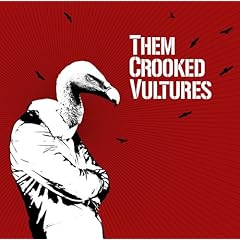
Now, this is probably a pretty easy selection. But, in my mind, it's not the best rock album of 2009. Early pretenders to the throne included Jack White's new side project, The Dead Weather. They were cracking at Glastonbury...but the album was slightly disappointing.
Now, Josh Homme, Dave Grohl and John-Paul Jones are the Crooked Vultures. I was desperate to listen to this album, ever since I listened to the 15 second leak during the summer. I'm pleased to report that the Amazon reviews on this album (and in various music mags) are spot on; it's a great record. That said, some tracks are obviously better than others - Elephant and Nobody Likes Me (and Neither do I) are the ones to listen to. It's an album to crank up and run with, or to play when everyone else's out of the house.
It's very derivative of Led Zep, but I don't care about that. I like Homme as a vocalist/lead guitarist, love JPJs's basslines and Grohl's powerhouse drumming.
I was gutted I couldn't see them live, but it'll hopefully happen next year. I hope.
7) A Place To Bury Strangers - Exploding Head

These guys came out of leftfield entirely. I heard reports about a band which were the loudest band in New York City. Bearing in mind the Yeah Yeah Yeahs come from there, it was a bold claim. Then someone on twitter (I forget who - probably Mr Kendrick) linked me to a track from their new album, Exploding Head, telling me to listen to it turned up. That track was Ego Death, and it was LOUD.
To describe their sound, it'd be like combining the Jesus & Mary Chain with shoe gazing bits and pieces. I really like that sound, even though I think I got a bit fed up with over-listening to Glasvegas last year.
It's easily the loudest album in the list, but it's really cracking. Heartily recommended, especially if you like your music loud and raw. I want to see them live in 2010.
6) Gomez - A New Tide

Gomez's debut album in 1998, Bring It On, is one of my favourite albums ever. In the top 5 debut albums ever, in my mind. Now, I love Gomez. Love them to bits. They've always, like the SFA, been able to do slightly odd things with music (though it always trended towards the bluesy side of things, given Ben Ottewell's voice) and make it sound fantastic.
I'd bought every Gomez album up to Split The Difference, which was just...ok. I thought they'd lost it in truth. Not enough long tracks (which the band are famed for), not enough melodies...it just sounded like a band devoid of ideas. So, I didn't buy the album after. And again, wasn't sure about buying another one...until a friend of mine told me their new album was a cracker. And he was right.
Tracks like 'Mix', 'Airstream Driver' and 'Little Pieces' would all sit very nicely on a Gomez best of. Pop, but not...all with enough quirks to keep me entertained. If you don't know Gomez at all, this is actually quite a good introduction. Then buy Bring It On.
5) Joe Gideon & The Shark - Harum Scarum

I first heard these guys live in the basement of a pub in 2008. There was something captivating about a tall, swaying preacherman whose bluesy voice barked tunes over a jangling electric guitar, whilst the drummer and ex-model (his sister) was in command of the sticks. A bit White Stripesy in lineup, but they sounded nothing like them. Actually, I was reminded of Nick Cave tracks (always a good thing) like John Finn's wife or even earlier. A lot of storytelling, which always makes me happy.
So when they released Harum Scarum in 2009, I was dead chuffed. 'Johan Was a Painter & An Arsonist' was better on record, 'Kathy Ray' finally made sense, and 'Civilization' was just as bonkers as I remembered it.
They're starting to get a little bit more mainstream attention these days, but I for one think they wholly deserve it. Have a listen. It won't be to everyone's taste, but if you like bluesy storytelling (some of which is very peculiar), you'll love 'em.
4) Fanfarlo - Reservoir

Another band I saw a year or so earlier - Fanfarlo are an indie band who did the small venue circuit (rather like Florence & The Machine) in London for a year or so. Having heard a few of their tracks - including this one, which for some unknown reason, didn't make the final album - I was hooked. That they had a massive band with a lot of drums and a brass section made me very happy indeed.
So, when they decided to launch their album by effectively giving it away for a pound, I downloaded it and had a listen. By this time, Coldplay (urgh) had decided to give them a support slot with them, and they were beginning to be widely listened to. Tracks like 'Harold T.Wilkins', 'The Walls Are Coming Down' and 'Fire Escape' were absolute corkers.
The sound is...i'll be honest, quite like Arcade Fire. And yet, I didn't really understand what all the fuss was about with Arcade Fire. I really like some of their tracks, but they were a bit..glacial. There's much to admire, but little to enjoy. Whereas these guys are all about crafting really great indie pop songs, and it shows. Go and see them live - the last time I did, they came into the audience with a few instruments during the encore, and did an excellent version of Neutral Milk Hotel's 'In An Aeroplane Over The Sea'.
The album's well measured, has some excellent strings...if I had to criticise, I'd have to say some of their best tracks weren't included on the album. Seek them out, they're on Youtube. Still, a cracking album.
3) The Pains of Being Pure At Heart - Pains of Being Pure At Heart

I have a friend called Ben, who writes some excellent music reviews here. Not a man to get overly enthusiastic about bands for no reason, he trumpeted a band called 'The Pains of Being Pure At Heart' as one of the best he'd heard all year.
And, having downloaded the album over the Summer, I had to agree, he was damn right. There's something about this album which is all about being young, loving the sunshine and just believing there's something vital about a band with guitars and a sense of euphoria which can only be understood when you listen to the tracks for the first time.
'Come Saturday', 'Contender'...they're all quality tracks. It's an album lovingly devoted to the three minute indie pop song. There've been criticisms online that they sound like C86, a band I don't know, but to hell with it - this is music at its most vital. And for the half an hour or so the album rattles through, I bet you'll agree. They are also cracking live - I saw them with a mate at the Scala this month, and was delighted they could pull it off.
2) Biffy Clyro - Only Revolutions

I've had a bit of a strange relationship with Biffy. Part of me, when I heard their first few albums, was determined (despite the obvious musicianship) to write them off as another My Chemical Romance, full of pretension and screaming. Yes, screaming. I didn't much like it then, and I don't really like it now.
Now, over the years they've been active (pretty much my University years onwards), I've softened towards them, culminating in seeing them live in Bristol in 2005. They'd just released Infinity Land, and I thought some of the tracks off that - most notably Glitter & Trauma and My Recovery Injection - were excellent.
An album released in 2007, Puzzle, divided fans. More obviously poppy than the earlier stuff, it won them a whole new legion of fans. I sort of ignored it, to be honest, partly because I was more interested in...uhh, moving to London at that point.
So come to 2009. A mate invites me along to see Biffy at Brixton. I thought i'd better check out their new album, 'Only Revolutions'. And bugger me if it isn't the best thing they've released. Obviously poppier than the early recordings, it retains the musical schizophrenia and melodies of the earlier stuff with more grown up (strings! on a Biffy album!) elements. I then buy Puzzle, and understand the shift. The last album was quite a lot poppier, and more of a straight rock album. This is a move back towards the older stuff, but not losing the more refined elements.
Josh Homme, I'm told, was involved with 'Bubbles', and it shows. Tracks like 'The Captain', and 'Golden Rule' are proper slices of rock though. Here's hoping they've influenced him too. And yes, they are quality live; you'll be amazed so much sound can come from three Scotsmen.
1) Idlewild - Post Electric Blues
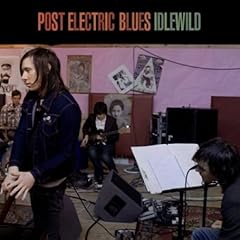
Idlewild's 'The Remote Part' is probably my album of the decade. It had everything; hard rock, soft acoustic numbers, and brilliantly clever lyrics. And, i'll be honest, I love all of their albums. From the punky start of the Captain EP through to today, they've evolved as i've grown up, which is cracking.
The album before this, 'Make Another World' was a return to the slightly louder Idlewild and had more obvious riffs than the folkier stuff. Roddy Woomble, the band's front man, had begun to pursue solo projects, which were EXTREMELY folk orientated (but still quality albums). I think it was to try and keep the projects separate.
So when the band decided they'd release their latest album, 'Post Electric Blues' by themselves first of all (before the label release), I decided to order a copy. And it really didn't disappoint me. It took elements from Roddy's latest solo project, 'Before the Ruin' (most notably, the backing vocals of Ms Heidi Talbot, who made my favourite track from 2008; the studio track's here) and mix it with the more guitar based sound from the prior album.
And the result's, in my opinion, the album of the year. Tracks like 'City Hall', 'Younger Than America', 'Dreams Of Nothing' and 'To Be Forgotten' are all utterly brilliant. And, naturally, when I saw them in Camden in November, they knocked it out of the park, with a nice mixture of tracks from their whole career. Quality stuff.
Also Recommended:
The Wave Machines self titled debut album is very promising; if one half of the album was like the first four and final track, it'd be top 5 album for sure. Check out 'Punk Spirit' and 'Dead Houses'. Kasabian suffer from their perennial problem - they only make half an album. While that half an album is probably the best thing they've ever done, it's still not worthy of all of the hype. They are quality live though, if you can get by most of their frankly nuts fans. Bat For Lashes' album 'Two Suns' is worthy of a listen, especially if you turn off half way through. It's great going to bed music (and I mean that in the nicest way), but it's not coherent, though I understand that was kind of the intention.
The XX's debut is sort of worthy of its plaudits. They do sound like no-one else, and it's a great sound. The problem? Every song sounds very, very similar. If you can put up with that, then it's an album you should own. The Yeah Yeah Yeahs album 'It's Blitz' is their best yet. It took me a while to get into (being such a fan of their earlier stuff), but 'Zero' is one of the songs of the year, definitely.
The Raveonettes' new album 'In and Out of Control' is an absolute corker, and only isn't in the top 10 because i've only very recently discovered them. Give it another week, and i'd probably have put it in. The Golden Silvers were brilliant live, and I love a couple of their tracks, but the rest of the album is damned patchy. 2009 was also notable, because it was the year I finally saw the point of the Maccabees when I saw them at Glasto. Their new album is a good 'un. I also was introduced to Andrew Bird, and liked him a lot (especially live), but I don't like all of his album, so it's in the top 20, but not the top 10.
Finally, the SFAs. Their album 'Dark Days/Light Years' deserves plaudits. Like most SFA stuff though, I tend to lose interest halfway through; the songs meander a bit too much. I think it's the best album they've released in years, but 3 or 4 tunes stop it from denting the top 10.
Live:
The best live gig was probably Neil Young at Glastonbury. I was instantly converted, and now own a lot of his stuff. The second best was Drever, Woomble, McCusker and Talbot all performing folksy stuff in the Union Chapel in Islington - 'Cathedrals' is my most played track on Last.Fm as a result, and I discovered the joys of Kris Drever. I love the venue too.
Fanfarlo at the ICA were great, along with Biffy Clyro at Brixton, Idlewild at Camden, Massive Attack were good at Brixton (I can't wait for the new album), Pains of Being Pure At Heart were cracking at the Scala, Red Snapper were quality at Glastonbury, Blur were good at Glastonbury, Andrew Bird was very very good at Shepherd's Bush Empire, and the Decemberists at the Coronet were cracking too. I also was finally able to see the Secret Machines at the Carling Academy in Islington, and they didn't disappoint; the drummer has the biggest kick drum i've ever seen.
Finally, Nick Cave & The Bad Seeds were good at Glasto. I don't know how any band could've followed that. They're consistently the best live band i've ever seen. See the full line up, and witness the genius of Martyn P Casey, Warren Ellis and Nick Cave himself.
Here's hoping 2010 is a good year for music. I enjoyed 2009. You can hear my favourite tracks from 2009 here and here.
Sunday, December 20, 2009
What's Too Slow?
Hello there. I've been a wee bit quiet over the last month and a bit. Sorry about that. Have had some fairly major things to sort out. Moving into a new flat, and oh, getting a new job.
One which makes the title of this blog (already a bit of a lie) seem like a complete nonsense. I'm just about to begin working in PR as a planner, for these guys. I'm not changing my blog's title though. I'll always be WAM. As much for the 1950's style ad man dress as anything else.
And I wanted to write a little bit about why i'm excited to be starting my new gig, and why I think it's interesting from a planning point of view.
First and foremost, it is going to be interesting, seeing the difference between advertising and PR. When I began my career, I was told the best planners were still in ATL agencies, and (based on who i've met since I was told that, think it's right) that PR shops 'didn't understand brands'. That last part was spurious nonsense. The arrogant assumption that a discipline can have an absolute handle on a brand is just madness. If a brand is something that people associate with their own experiences and the experiences of other people, then I can't see how one place can have a monopoly on the thinking. To think anything else is to be unhealthily obsessed with triangles made in PowerPoint.
What really prompted thinking about PR as a discipline was something simple, really. I was thinking about speed. Even the most successful piece of advertising, that nods to/creates culture (at its best) takes a awfully long time to come to market.
Now, I don't necessarily believe that 'Fast Strategy' is the answer. Quality thinking can happen quickly, but the best solutions can't be rushed. But nor do I believe the 'one true insight' thought - that a clever bit of thinking will remain true forever, or that advertising's ability to capture the zeitgeist (or create it) will be able to be bottled for three/six months whilst the campaign is delivered.
In fact, I think it's damned dangerous to think in campaigns. Look at the recent Eurostar furore. All the branding in the world, no matter how APG award winning, won't stop the brand taking a knock in a lot of people's eyes. And while I think 'social media' is a nonsensical term, and that the need for specialist agencies to do it is bloody lazy, I do think crisis management within the clientside and agency side is very important.
But what's perhaps overlooked is the month or three after this. Could a creative solution play on this? I'm not talking about pile it high and sell it cheap 'community management', which social media agencies claim to do - I'm talking about a genuinely thoughtful piece of lateral thinking which acknowledges the crowd, and what's happened in the news. For example, with RATM getting Christmas number 1 - if their record company was wise, it'd produce something a little bit more meaningful than cheaper prices on all of their albums.
Various agencies where I worked would unfairly deride this as 'tactical' or 'promotional' advertising. But it's not, not really. It arguably builds the brand more than those strategies which are incubated for ages and take a long time to come to market. It's only throw away when it's not built upon, and is a one-off thing. But what's to stop a lot of 'tactical' activity being chained together and built upon? I still get drawn to the model of keeping 10% of the marketing budget back to be spent to capitalise on things like this.
It all obviously has some bearing on where research money gets spent both inside and outside of agencies. I'm really not interested in old quant data which purports to tell the future and doesn't seem to be quota-ed properly collected (TGI, i'm looking at you), and would love to try and dissuade clients from spending money on quant like this - which seem to be numbers for the sake of something to cling on to. Map qual/attitudinal data with sales. Don't use a damned crutch. That'll be a big job in my new role, I can already tell. Heh.
Regardless of how the shake down goes in the upcoming years, i'm looking forward to the new challenge and the new discipline. I'm not going to get drawn into a 'PR vs Advertising' debate. Both have their merits. I'll forever be grateful to the people i've worked for in adland - they've taught me a lot. I hope PR can do the same.
Monday, November 09, 2009
When is it right to experiment?
As the last post on anti-social brands alluded to, my position on what brands should and shouldn't do is very much rooted in their history.
Ignoring history is, I think, a problem of the communications industry; it gives what's gone before a short shrift, always trying the newest and most exciting thing, which it claims is going to be the new and revolutionary approach to branding/thinking/marketing/life. This is perhaps unsurprising; agencies are founded and built on their thoughts and approaches - to always be seen to take the lead, so they can 'add value'.
Though it's a bit GCSE Business Studies, what's the damage of doing this? What benefits do you lose when you discard previous thinking? Recently, there's been a raft of new campaigns that fly in the face of the past 10/20 years of advertising. If all you're trying to do with your brand is ensure it's able to be 'remixed', I think you ignore an important point, that brands are founded on points of view - either superior product, or a thought about the world/marketplace they operate in.
That's not to say i'd try to stop brands from innovating, or from agencies from pitching the latest in content, but I would try to stop the relentless need for change that seems to have blighted the marketplace in the last ten years or so. Maybe it's got something to do with the speed of technological change, or the length of time Marketing Directors have in their job, or that agencies have become increasingly like magpies - only interested in the next shiny thing.
In fact, it's a funny thing. In a time where planners are obsessed with the psychology of loss aversion (the fear of losing something, a feeling that's so strong, people go out of their way to avoid having things taken away) it's surprising that we don't apply this thinking to marketing or advertising. Why aren't we more worried about brands trying to do away with our expertise? Agencies like being seen as cutting edge when they suggest it. But why don't they do away with this need? Why don't they man up, and point out the economic danger of playing with the brand, both for the client and the agency.
I think this is also wrapped up in the 'wisdom of crowds' (which, i'd suggest, is used improperly a lot of the time). Often, the masses have a confused opinion when aggregrated - as Jeremy Bullmore highlights. With that in mind, what hope have they of creating a coherent campaign? I'd rather one or two informed people's strong opinion shining through the work, and that opinion disseminated to their respective agency/client sides, so there's a sense that the brand's position doesn't get confused.
Wanting to be the rainmaker in your agency or industry is all well and good, but it's not always the right thing to do. Knowing when experimentation should happen, or how conversation can enable experiments - that's the mark of a top quality comms person.
I'm thinking of brands like Walkers, who took a commonly held truism (that their consumers all would like a specialised version of their products), asked the masses, and then aggregated it themselves. They didn't just blindly turn the brand's point of view and communications over to consumers. That would have flown in the face of their years of building a brand and product that is too good to share.
And, most importantly, I don't think most people can be bothered with it. I'm in complete agreement with Tom Ewing here. Walkers worked because people wanted to get involved, and there was a commonly held thought that people could come up with good flavours.
Participating in conversations about your brand, whether they are about politics, economics or culture is surely a good thing. I worry that the magpie within a lot of comms folk leads to people to getting involved in situations which aren't right for their brand/s.


